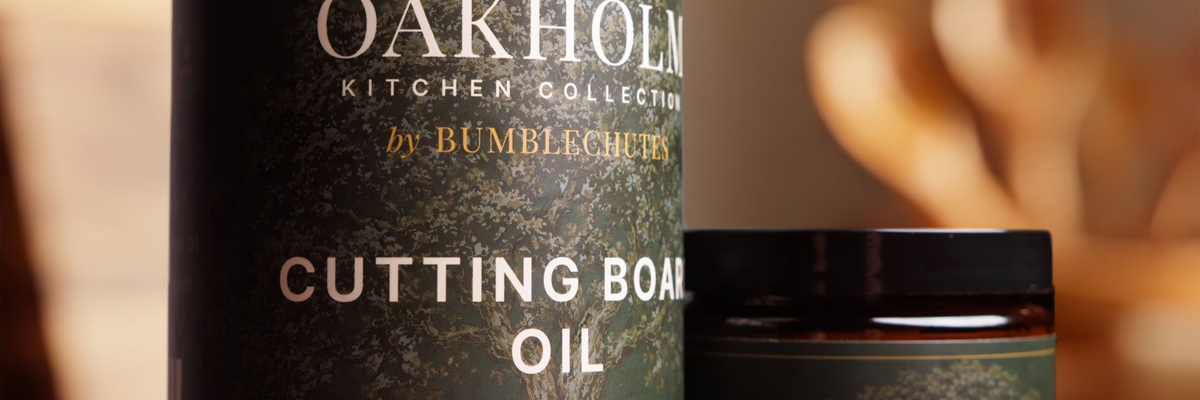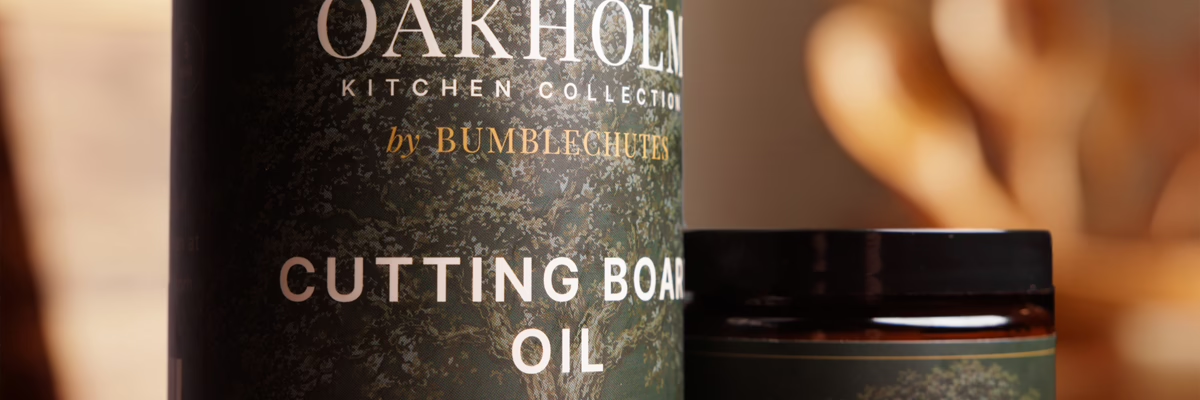
Our Look Has Evolved. Our Craft Remains Uncompromised. — Meet the New Bumblechutes.

The Definitive Guide to Wooden Kitchenware Care

Why Natural Oils and Waxes Matter (And Exactly How to Do It Right)

Bottom Line Up Front (BLUF)

If you take only one thing away from this article, let it be this:

Wooden kitchenware only survives long-term when it is properly hydrated and properly sealed.

That means:

  • Oil first (to nourish and stabilize the wood fibers)
  • Wax second (to protect, seal, and extend durability)

Mineral oil alone is not enough. Petroleum-based finishes do not belong on food-contact surfaces. Silicone additives and synthetic fragrances are unnecessary and counterproductive. “Mystery blends” with undisclosed ingredients should never touch your food.

Wood is a natural, living material even after it’s milled. If you don’t respect that, your cutting boards, utensils, bowls, and butcher blocks will crack, warp, dry out, stain, and eventually fail.

The correct system for Wooden Kitchenware Care uses:

  • Fractionated coconut oil
  • Non-nano zinc oxide
  • Natural vitamin E oil
  • Lemon oil
  • Beeswax sourced from U.S. beekeepers
  • Organic carnauba wax

Applied in the proper order. Maintained consistently. Never put in a dishwasher.

That is how you keep wooden kitchenware in top form for decades instead of years.

Now let’s break it down in detail.

Why Wooden Kitchenware Care Needs Real Protection (Not Just a Quick Wipe)

Wood is not plastic. It is not ceramic. It is not metal.

Wood is a cellular structure made primarily of cellulose, hemicellulose, and lignin. Those components form microscopic tube-like pathways that originally transported water and nutrients through a living tree. Even after harvesting and milling, those pathways still exist.

Think of wood as millions of tiny straws bundled together.

Those straws:

  • Absorb moisture
  • Release moisture
  • Expand when wet
  • Shrink when dry

Every time you wash a cutting board, the wood takes on water. Every time it dries, it releases water. That constant cycling creates internal stress.

Without protection, this leads to:

  • Surface checking
  • Deep cracking
  • Warping and cupping
  • Raised grain
  • Loss of structural integrity

This is not cosmetic damage. This is mechanical failure.

The entire purpose of wood care is to manage that moisture exchange while protecting the surface from abrasion, oxidation, and contamination.

That requires two things:

  1. Internal hydration
  2. External protection

Oil handles the first. Wax handles the second.

Why Wooden Kitchenware Fails

Every failed cutting board follows the same path.

1. Repeated water saturation

2. Aggressive detergents stripping natural oils

3. Heat exposure

4. No protective barrier

5. Drying stress

6. Cracking and deformation

And the worst offender of all?

Dishwashers

Dishwashers combine:

  • Prolonged hot water exposure
  • Alkaline detergents
  • Forced heat drying

That combination drives water deep into the wood fibers, then rapidly pulls it back out. The fibers swell, then shrink. Over and over.

This creates internal fractures that you cannot see until it’s too late.

Let me be blunt:

If you put wooden kitchenware in a dishwasher, you are actively destroying it.

Hand wash only. Mild soap. Dry immediately.

Every single time.

The Mineral Oil Problem (And Why It’s Not Enough)

Mineral oil is everywhere in woodworking and kitchen care.

It’s popular because:

  • It’s cheap
  • It’s odorless
  • It’s clear
  • It’s shelf-stable

But here’s the hard truth:

Mineral oil does not cure.

It does not polymerize. It does not crosslink. It does not harden.

It simply sits in the wood until soap and water pull it back out.

That means:

  • No surface protection
  • No structural reinforcement
  • No sealing effect
  • No oxidation resistance
  • No UV mitigation

Mineral oil alone is temporary hydration. That’s it.

If you’re only using mineral oil on your cutting boards, you are stuck in an endless cycle of reapplication with minimal protection.

Oil without wax is incomplete.

Why Petroleum-Based Finishes Don’t Belong on Food Surfaces

Some products use petroleum-derived components to create harder films.

Yes, they can be durable.

But they also introduce:

  • Solvents
  • Synthetic binders
  • Plasticizers
  • Long-term unknowns for food-contact exposure

There is zero reason to introduce petrochemicals into surfaces that touch your family’s food every day when natural alternatives work exceptionally well.

Durability should never come at the expense of ingredient integrity.

The Danger of “Mystery Blends”

If a label says “proprietary blend” without clearly listing ingredients, that’s a red flag.

You deserve to know exactly what touches your food.

At Bumblechutes, we disclose everything.

No hidden solvents.

No undisclosed additives.

No vague language.

Transparency matters.

Silicone Additives and Synthetic Fragrances

Silicone is often added to create artificial slickness.

It offers:

  • No nourishment to wood
  • No meaningful long-term protection
  • Interference with future refinishing

Synthetic fragrances exist solely for scent.

They provide:

  • Zero structural benefit
  • Potential chemical exposure
  • No place on food-contact surfaces

If an ingredient doesn’t actively protect wood or improve safety, it doesn’t belong.

The Correct System: Oil First, Wax Second

This is non-negotiable.

Step 1: Oil (Serum)

Oil penetrates into the wood fibers. It:

  • Replaces lost lipids
  • Reduces internal drying stress
  • Improves dimensional stability
  • Slows moisture exchange

This is hydration at a cellular level.

Step 2: Wax (Conditioner)

Wax stays primarily near the surface. It:

  • Repels water
  • Adds abrasion resistance
  • Fills micro-voids
  • Extends time between oil applications

Oil nourishes.

Wax protects.

Together they form a complete system.

Separately they are incomplete.

Why a True Two-Part System Beats “All-in-One” Oil-and-Wax Blends:

One of the biggest mistakes in wood care is assuming a single “oil-and-wax-in-one” product can do everything equally well. It can’t. Oil and wax perform fundamentally different jobs, and combining them into one formula forces compromise on both sides. When wax is suspended in oil, it limits how deeply the oil can penetrate the wood fibers, reducing hydration and internal stabilization. At the same time, the wax gets diluted and dispersed, preventing it from forming a meaningful protective surface layer. The result is a product that partially nourishes and partially protects, but never excels at either. A true two-part system solves this by letting each step do its job properly: first, a dedicated penetrating oil to fully hydrate and stabilize the wood from within; then a dedicated wax conditioner to build a durable, hydrophobic barrier on the surface. This separation is intentional and critical. It maximizes absorption, maximizes protection, and dramatically extends the life of your kitchenware. All-in-one blends are convenient. A proper two-step system is effective. If longevity matters, there is no comparison.

Why Our Hydrating Wood Serum Works

Our oil phase is built around Fractionated Coconut Oil, supported by non-nano zinc oxide, vitamin E, and lemon oil.

Let’s walk through each.

Fractionated Coconut Oil

This is not grocery-store coconut oil.

Fractionated coconut oil consists primarily of medium-chain triglycerides that remain liquid at room temperature and resist oxidation.

This matters because it:

  • Penetrates deeply due to molecular size
  • Does not go rancid
  • Does not become sticky
  • Maintains flexibility inside wood fibers

Unlike many plant oils, it does not polymerize into brittle films or develop off odors over time.

It hydrates without instability.

Non-Nano Zinc Oxide

Zinc oxide provides UV reflectivity and oxidative protection.

We use non-nano particles so they remain surface-bound rather than systemically absorbed.

In wood care, zinc oxide:

  • Slows photodegradation
  • Reduces color fading
  • Helps stabilize surface oils
  • Adds another layer of environmental defense

Even indoor kitchenware is exposed to UV through windows and lighting.

This ingredient extends longevity.

Natural Vitamin E Oil

Vitamin E acts as an antioxidant.

It:

  • Protects oils from oxidative breakdown
  • Extends shelf stability
  • Helps prevent rancidity
  • Preserves performance over time

This protects both the product and your wood.

Lemon Oil

Lemon oil provides:

  • Natural degreasing
  • Mild antimicrobial properties
  • Surface cleaning support
  • A clean, natural scent

No synthetic fragrance. No artificial masking.

Why Our Wood Conditioner Is the Perfect Top Coat

This is where durability is created.

Our conditioner uses all the oils listed above and also:

  • Beeswax from U.S. beekeepers
  • Organic carnauba wax

Each serves a different purpose.

Beeswax

Beeswax:

  • Is naturally hydrophobic
  • Softens into wood grain
  • Fills microscopic voids
  • Enhances grain clarity
  • Provides mild antimicrobial benefits

It creates a breathable barrier that protects without suffocating the wood.

Organic Carnauba Wax

Carnauba is harder than beeswax.

It:

  • Raises melting point
  • Improves abrasion resistance
  • Increases water repellency
  • Adds surface durability

Together, beeswax and carnauba create a balanced protective layer that is both flexible and strong.

Exact Application Workflow

For New or Dry Wood

  1. Clean with mild soap.
  2. Dry completely.
  3. Apply Hydrating Wood Serum generously.
  4. Let absorb 20 to 30 minutes.
  5. Wipe excess.
  6. Allow to rest 8 to 24 hours.
  7. Apply Wood Conditioner.
  8. Buff.

Maintenance Schedule

This depends on usage.

Light Use (occasional cooking)

  • Oil every 1 to 2 months
  • Wax every 2 to 3 months

Moderate Use (daily home cooking)

  • Oil monthly
  • Wax monthly

Heavy Use (professional kitchens)

  • Oil every 2 to 4 weeks
  • Wax every 2 to 4 weeks

If water stops beading: reapply wax. If wood looks dull or dry: oil first, then wax.

Why This Matters for Food Safety

Properly maintained wood:

  • Resists cracking
  • Dries faster
  • Reduces deep bacterial penetration
  • Maintains structural integrity

Cracked wood traps food. Dry wood splits. Neglected boards harbor bacteria.

Maintenance is not cosmetic.

Maintenance is food safety.

Food Safe. Non-Toxic. Family Safe.

Our system is:

  • Food safe
  • Food contact safe once absorbed
  • Non-toxic
  • Safe for cutting boards
  • Safe for children’s items

Every ingredient is chosen intentionally.

No petroleum finishes.

No silicone additives.

No synthetic fragrances.

No mystery blends.

The Long-Term View

Wood is not disposable.

A properly cared-for cutting board can last decades.

Neglected wood becomes landfill.

I built Bumblechutes because I believe in products that respect materials, craftsmanship, and longevity.

Built to last is not a slogan.

It’s a philosophy.

Final Takeaway

If you are serious about protecting wooden kitchenware:

  • Stop relying on mineral oil alone.
  • Stop using petroleum-based finishes.
  • Stop accepting undisclosed formulations.
  • Never use dishwashers.

Use a real system.

Oil first. Wax second. Maintain consistently.

That’s how professionals do it.

That’s how your kitchenware survives.

Ready to Protect Your Kitchenware the Right Way?

Start with Hydrating Wood Serum.

Seal with Wood Conditioner.

If you care about quality.

If you care about food safety.

If you care about longevity.

Do it right.

Restore. Don’t Replace!

Thanks for reading and if you have any questions, feel free to reach out at Info@Bumblechutes.com

Thanks again,

Erik Albrecht

Founder, Bumblechutes
How to Naturally Treat and Care for Your Butcher Block

Your butcher block deserves the same care and attention as the food you prepare on it. With the right natural butcher block care routine, you can keep it looking beautiful, performing well, and lasting for years, without relying on synthetic coatings or harsh chemicals. Whether it’s your kitchen’s main prep surface or a statement countertop, here’s how to protect it the Bumblechutes way.

Why Your Butcher Block Needs Regular Care

Butcher block is made from natural wood, which means it’s constantly expanding and contracting with changes in moisture and temperature. Without proper conditioning, it can dry out, crack, or warp, especially in busy kitchens. Regular oiling and waxing keeps the wood hydrated, sealed, and resistant to water and stains.

Think of it like skincare for your kitchen: a little regular nourishment goes a long way.

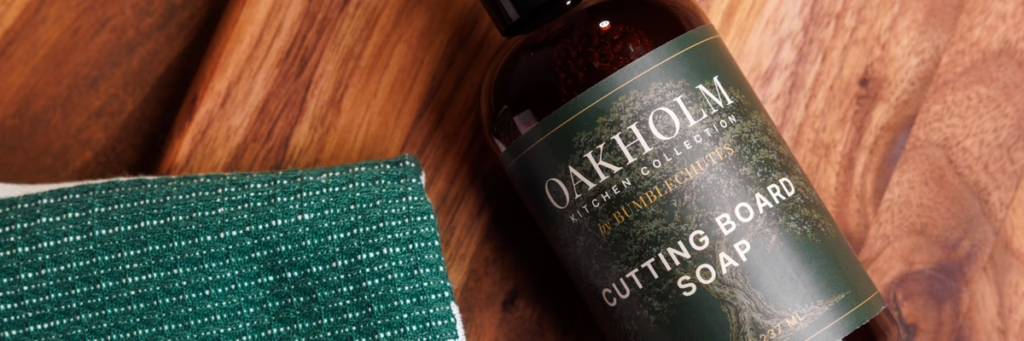
Bumblechutes Cutting Board Soap

Step 1: Start With a Clean Surface

Before you treat your butcher block, start by cleaning it thoroughly. You can get everything you need to properly clean your surface with our Cutting Board Cleaning Kit.

  1. Wipe away crumbs and residue with a damp cloth.
  2. For deeper cleaning, sprinkle Himalayan salt over the surface and scrub gently with our Natural Wood Soap. This natural combo helps lift stains, deodorize, and neutralize bacteria, no chemicals required.
  3. Rinse with warm water (not hot).
  4. Dry completely. Moisture and oil don’t mix, so make sure your butcher block is bone-dry before conditioning.
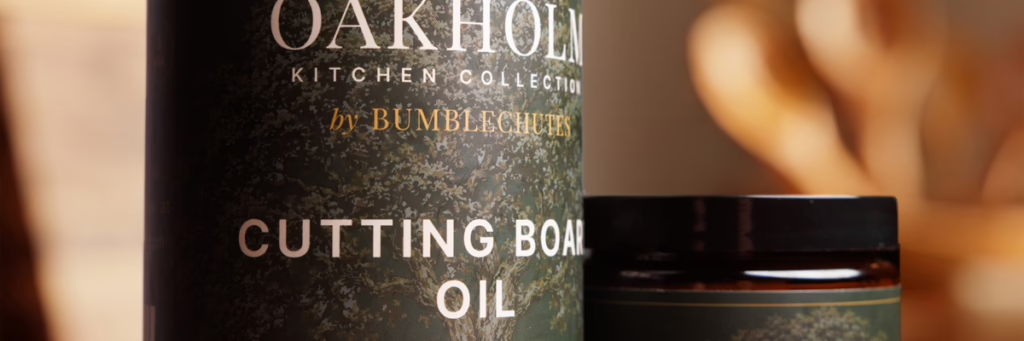
Bumblechutes Cutting Board Oil

Step 2: Condition With a Food-Safe Oil

Oiling your butcher block keeps the wood hydrated and prevents cracking or dullness.

  1. Apply a generous coat of a food-safe oil like Bumblechutes Hydrating Wood Serum, made from natural, mineral oil-free ingredients.
  2. Use a clean, lint-free cloth to massage the oil into the wood, following the grain.
  3. Let it soak at least 20-30 minutes so the wood can fully absorb it.
  4. Wipe off any excess before moving on to sealing.

💡 Pro tip: For new or very dry wood, apply multiple coats until the wood is thoroughly hydrated.

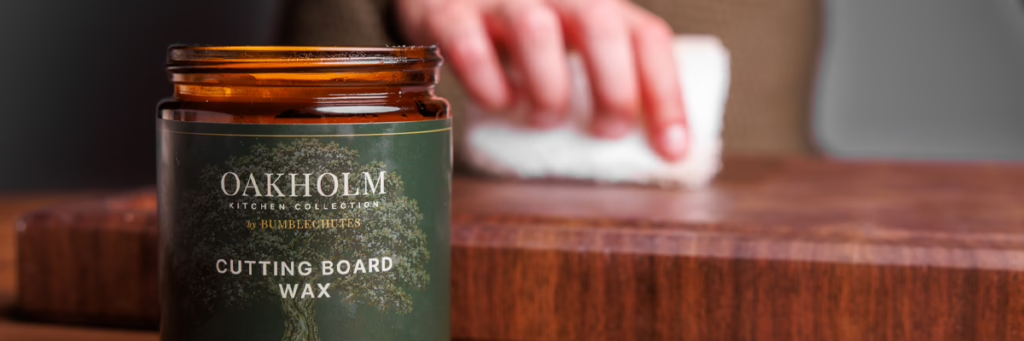
Bumblechutes Cutting Board Wax

Step 3: Seal and Protect With Conditioner

After oiling, a thin layer of conditioner adds an extra line of defense against water, stains, and wear.

  1. Apply a light coat of Bumblechutes All-In-One Wood Conditioner with a soft cloth.
  2. Buff it out until smooth to ensure even coverage and penetration.
  3. Allow the conditioner to sit and absorb into the wood for optimal protection and shine.

This step locks in moisture and gives your butcher block that signature soft sheen.

Step 4: Keep Up With a Simple Maintenance Routine

A consistent care schedule will keep your butcher block looking new, no matter how much use it gets.

  • Wipe up spills quickly to prevent staining.
  • Reapply oil monthly (or as needed, depending on use).
  • Condition every 2–3 months to maintain a smooth, water-resistant finish.
  • Avoid soaking, harsh cleaners, or placing hot pots directly on the surface.

If you ever notice roughness or light scratches, a quick sand with fine-grit paper (220 grit works well) followed by a fresh coat of oil and wax will revive the finish.

The Takeaway

Caring for your butcher block doesn’t need to be complicated — it just needs to be consistent. By using natural oils and waxes, you’re not only keeping your surfaces safe for food prep but also protecting the wood’s natural integrity. With a few minutes of care each month, your butcher block will stay strong, smooth, and ready for whatever’s on the cutting board.

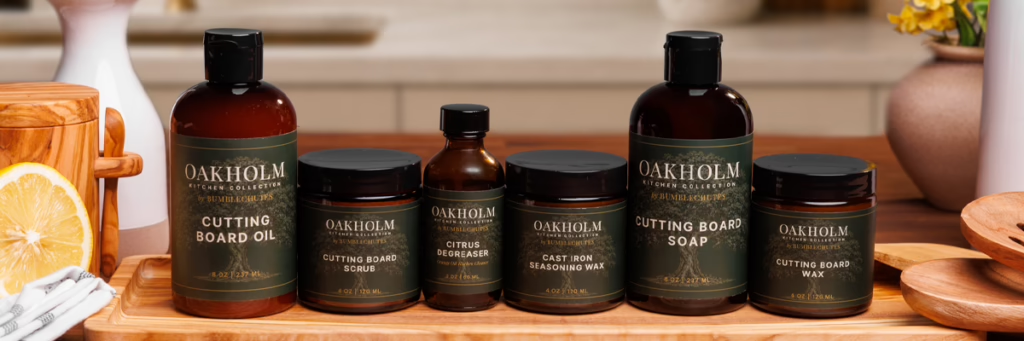
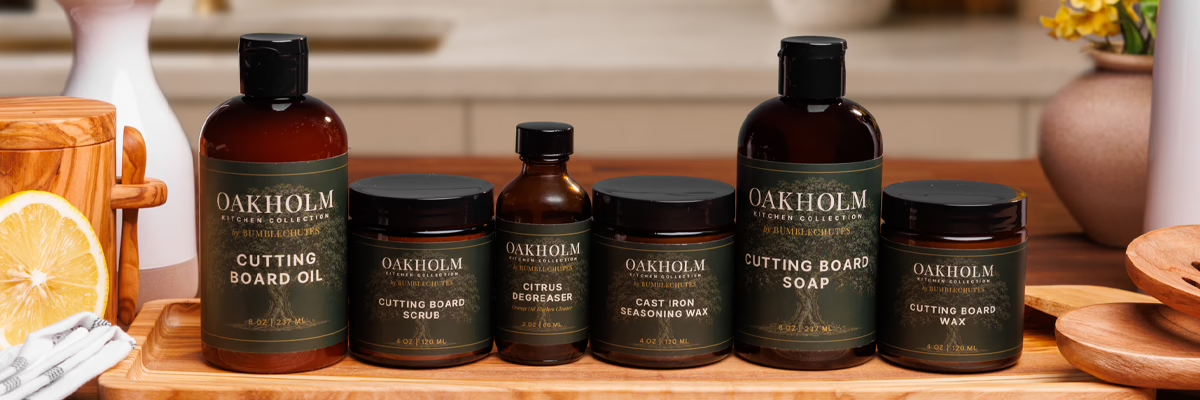
Bumblechutes Kitchen Collection

Recommended Bumblechutes Products

The Ultimate Guide to Cast Iron Care

Introduction: The Passion Behind Perfect Cast Iron Care

If you’ve ever cooked on a perfectly seasoned cast-iron skillet, you know the magic. Food slides across the surface. Heat spreads evenly. Cleanup is simple. And when you pick up that pan, you can feel its weight, its history, its durability.

But if you’ve ever dealt with a rusty skillet, a sticky griddle, or a pan where everything seems to weld itself in place, you also know the frustration that comes from improper care.

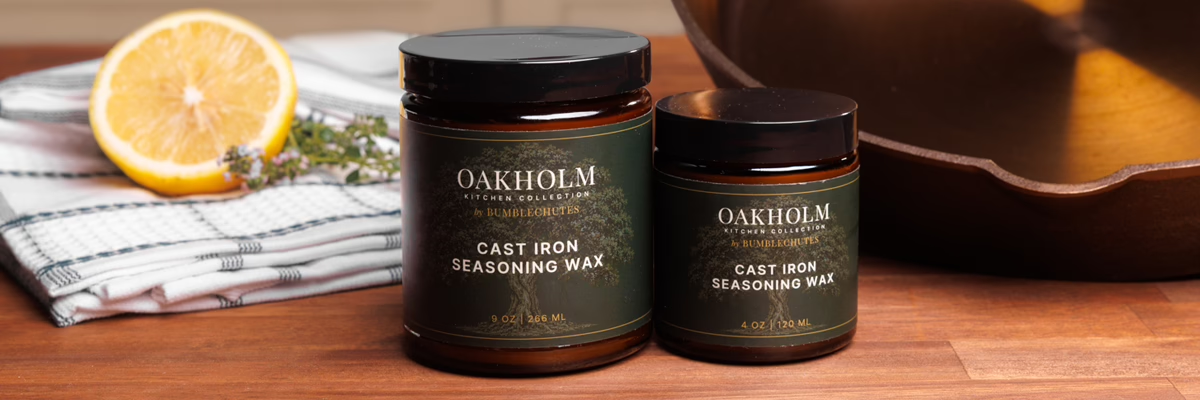
That frustration is exactly what led me here. I’m Erik, the founder of Bumblechutes, and I spent over a year developing what I believe is the perfect solution for cast-iron owners everywhere: our Natural Cast Iron & Grill Seasoning Wax.

This isn’t just a product pitch. This is everything I’ve learned about cast-iron care; the science, the mistakes most people make, and why I created a formula that can season, condition, and protect your cast iron for life.

Section 1. Why Cast Iron Is Special

Cast iron isn’t like other cookware. Stainless steel, aluminum, or nonstick pans are smooth and sealed from the factory. Cast iron, on the other hand, starts out raw and porous. If you looked at it under a microscope, you’d see a landscape full of tiny hills, valleys, and channels.

This is what makes cast iron so unique:

  • Those microscopic valleys hold oils and fats, creating incredible flavor.
  • Its density holds heat longer than almost any other cookware.
  • With proper seasoning, cast iron develops a naturally nonstick surface over time.

But here’s the catch; those same pores make it vulnerable. Left unprotected, cast iron is exposed to oxygen, moisture, and acids… which means one thing: rust.

Proper care isn’t optional if you want your cast iron to last for decades; even generations. Without it, you’ll constantly fight sticking, flaking, and corrosion. With the right care, though? You can pass that pan down to your kids and grandkids.

Section 2. The Science Behind Seasoning

Most people think seasoning a pan just means rubbing oil on it and throwing it in the oven. But what’s actually happening is pure chemistry, and understanding that chemistry is the key to doing it right.

When you heat the right blend of oils on cast iron, polymerization happens. That’s a fancy word for what’s basically a natural transformation: the oils react with heat and oxygen to create a hard, protective layer that bonds directly to the iron’s surface. We know a thing or two about polymerization, check out how our polymerized Tung Oil sets the bar for naturally protecting wood. Anyways, back to cast iron.

This layer does three incredibly important things:

  1. Protects the iron from rust by creating a barrier against water and air.
  2. Smooths the surface, filling microscopic pores and making cooking easier.
  3. Builds a naturally nonstick finish over time; without any synthetic coatings.

But here’s the problem: most people either use the wrong oils or use too much at once. That’s why so many cast-iron pans end up sticky, blotchy, or peeling.

I built Bumblechutes Natural Cast Iron & Grill Seasoning Wax to solve those exact problems; making seasoning easier, faster, and foolproof.

Section 3. Seasoning vs. Conditioning (And Why You Need Both)

Here’s the part a lot of people miss: seasoning and conditioning aren’t the same thing.

  • Seasoning is when you build the foundation; applying oils and baking them until they harden into a durable layer (Step 1).
  • Conditioning is how you maintain that foundation; replenishing oils after cooking, protecting the surface, and keeping the nonstick properties alive (Step 2).

Most products out there handle one or the other. Some are great for that initial bake, but they don’t protect long-term. Others make surfaces shiny but don’t build any real durability underneath.

Our Bumblechutes wax does both in one step. It’s engineered to penetrate deep into the pores of the iron during seasoning and condition the surface every time you cook, wash, or wipe your pan down. That means fewer re-seasonings, fewer sticky spots, and better results every time you use your cast iron.

Section 4. The Most Common Cast Iron Problems (and How We Fix Them)

I’ve talked to hundreds of cast-iron owners, and almost everyone runs into the same frustrations. Here’s what goes wrong; and how our wax solves it.

1. Sticky, Gummy Surfaces

The problem: Using too much oil or the wrong oils. These don’t fully polymerize and leave a tacky residue.

Our solution: This formula is designed for ultra thin application. It buffs on dry and smooth, meaning no sticky mess, no pooling, and no frustration.

2. Rust Spots

The problem: Moisture creeps into unsealed pores and oxidation takes over.

Our solution: Our wax creates a hydrophobic barrier that water simply can’t penetrate. Even in humid kitchens or outdoor environments, your cast iron stays protected.

3. Flaking or Chipping Seasoning

The problem: Single-oil seasoning methods create a brittle film that cracks under heat and pressure.

Our solution: Our blend balances hardness with flexibility so the seasoning stays bonded; even under extreme heat.

4. Uneven or Blotchy Seasoning

The problem: Oils pool into microscopic valleys, leaving darker spots and streaks.

Our solution: Our formula self-levels naturally for a smooth, consistent finish across the entire cooking surface.

5. Rancid Smells

The problem: Cheap oils break down in the tin and on the pan, leaving an unpleasant odor.

Our solution: We stabilize our wax naturally so it stays fresh, clean, and safe; no chemicals, no synthetics, and no off smells.

6. Food Sticking to the Pan

The problem: The seasoning layer is too thin or hasn’t bonded correctly.

Our solution: Our formula accelerates polymerization and builds a stronger base layer faster; meaning eggs slide, steaks sear, and pancakes flip perfectly.

Section 5. Why Our Formula Works

I spent over a year experimenting with ratios, cooking techniques, and application methods to get this formula right. The magic isn’t in one ingredient, it’s in the combination.

We use a balanced blend of natural oils, waxes, and stabilizers chosen specifically for how they polymerize, condition, and protect:

  • Some components create a hard, durable backbone for your seasoning layer.
  • Others make the surface slick, flexible, and resistant to cracking.
  • Our waxes fill the pores of the iron, sealing out water and oxygen for maximum rust protection.
  • Natural stabilizers keep the formula fresh and food-safe, even after months on the shelf.

The result is a single product that:

  • Builds a stronger, longer-lasting seasoning layer
  • Conditions the surface every time you use it
  • Repels water and moisture
  • Prevents sticky spots and flaking
  • Keeps your cast iron looking and performing like new

This is why our Bumblechutes Cast Iron & Grill Seasoning Wax isn’t just another product on the shelf, it’s the result of hundreds of hours of testing, thousands of applications, and a deep understanding of how cast iron works at a microscopic level.

Section 6. How to Use Our Seasoning Wax

Here’s the step-by-step guide I personally recommend for flawless results:

For Initial Seasoning

  1. Clean your cast iron thoroughly. Even from the factory there can be dirt and other oils on the iron. If you’re rejuvenating something a little used, scrub off rust, residue, or old flaky seasoning.
  2. Dry completely (water is the enemy of iron).
  3. Warm your pan slightly to open the pores.
  4. Apply a pea-sized dab of wax for a 10–12” skillet.
  5. Buff it until the surface looks completely dry.
  6. If you are seasoning a pan, bake upside-down at 475–500°F for 60 minutes. If you are working with a griddle, turn the heat on high, have the top at 475–500°F, and cook until the smoke clears.
  7. Let it cool and repeat 3–5 coats for a rock-solid foundation.

A full how to video is coming soon, so stay tuned to help guide you through these steps.

For Ongoing Maintenance

  • After cooking, rinse and dry your pan.
  • While it’s still warm, apply a fingertip amount of wax.
  • Buff until dry; the wax melts into the pores instantly.
  • Store with confidence knowing your seasoning layer is safe.

This process protects, maintains, and strengthens your seasoning over time.

Section 7. Why Bumblechutes Wax Works on Grills and Griddles Too

This isn’t just for pans, our formula is incredible for:

  • Blackstone & Camp Chef flat tops
  • Outdoor BBQ grills
  • Carbon steel pans
  • Grill grates and planchas

Large surfaces like griddles require ultra-thin, streak-free application. Our wax spreads evenly, won’t puddle, and seasons faster than oils alone.

Section 8. Save More with Bumblechutes Reserve & Kitchen Care Plan

If you want to protect your entire collection and keep it looking beautiful for decades, we’ve made it even easier.

Bumblechutes Reserve

  • Save up to 35% on every product we make.
  • Get exclusive early access to new releases.
  • Perfect for serious makers, grillers, and collectors.

Kitchen Care Plan

  • Save big specifically on kitchen care products like our seasoning wax, cutting board oils, and wood finishes.
  • Ideal if cast-iron and wood care are your top priority.

Both programs make it easy to stock up and save; and for most customers, the membership pays for itself after just one or two orders.

Section 9. FAQs

Q: Do I need to strip my cast iron before using Bumblechutes Wax?

No, you can use it on brand-new pans, restored skillets, or fully seasoned surfaces.

Q: How often should I re-season?

With regular conditioning using our wax, most pans never need a full strip-down. One good initial seasoning and consistent care are all you need.

Q: Is this food-safe?

Yes, 100%. Our formula is made from natural, food-contact-safe ingredients and produces no harmful fumes.

Q: Can I use this on carbon steel and griddles?

Absolutely! It works beautifully on all iron-based cookware.

Section 10. Final Thoughts

Cast iron is more than cookware, it’s history you can cook on. With the right care, it lasts forever. But the secret isn’t just about using any oil or wax. It’s about using the right formula, the right way.

I built this Bumblechutes Natural Cast Iron & Grill Seasoning Wax to make caring for cast iron simple, effective, and foolproof. One tin seasons, conditions, and protects your cast iron for a lifetime.

If you’ve read this far, you care about your cookware, and I promise, this wax will make a difference. Your pans will cook better, clean easier, and last longer.

Your Next Step

Take care of your cast iron today, and it’ll take care of you for the rest of your life.

Thank you!

Erik Albrecht

Founder, Bumblechutes
The Best Oil for Finishing Wood: Why Polymerized Tung Oil Is the Superior Natural Choice

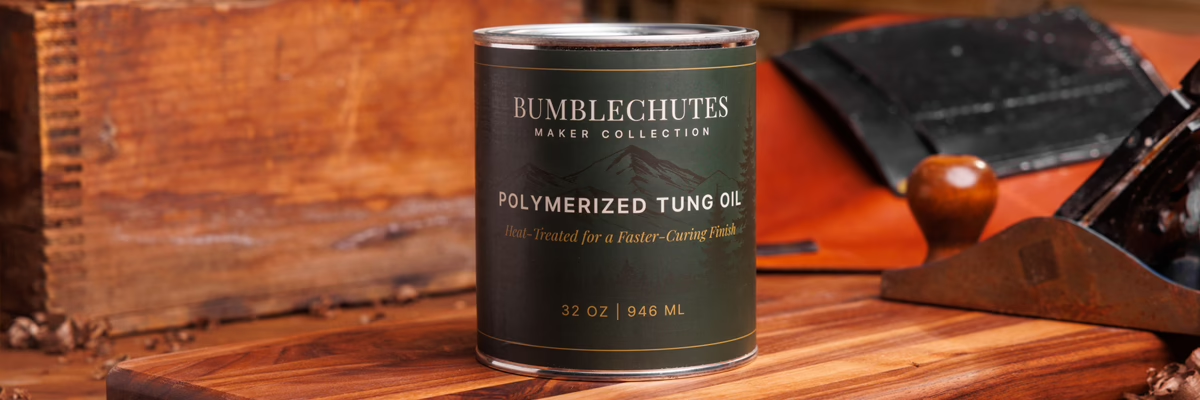
If you love working with wood, you know a great finish can make or break your project. Polymerized tung oil offers that perfect blend of natural beauty and lasting protection, and Bumblechutes’ version takes it to the next level.

When it comes to wood finishing, few products have the storied reputation of tung oil. Derived from the seeds of the tung tree, this all-natural oil has been used for centuries to protect and beautify wood [1]. Woodworkers from ancient China to modern DIYers prize tung oil for its ability to penetrate deep into wood fibers, highlight the grain with a rich “wet look,” and create a durable, water-resistant finish [2][3]. Unlike many synthetic varnishes that form a plastic film on top of the wood, tung oil bonds within the wood, flexing as the wood expands and contracts, so it won’t crack or peel over time [4]. The result is a natural, breathable, and long-lasting finish that keeps wood looking authentic and alive.

However, if you’ve ever tried using raw tung oil, you might have experienced its one big drawback: it dries incredibly slowly. Waiting weeks for each coat to cure can test anyone’s patience [5]. This is where polymerized tung oil comes to the rescue – a modern twist that maintains tung oil’s all-natural goodness while turbocharging its drying and curing time. In this comprehensive guide, we’ll explore everything you need to know about tung oil, the difference between raw and polymerized versions, and why Bumblechutes’ Polymerized Tung Oil stands out as the best choice for health-conscious woodworkers and makers seeking a safe, sustainable, and top-performing finish.

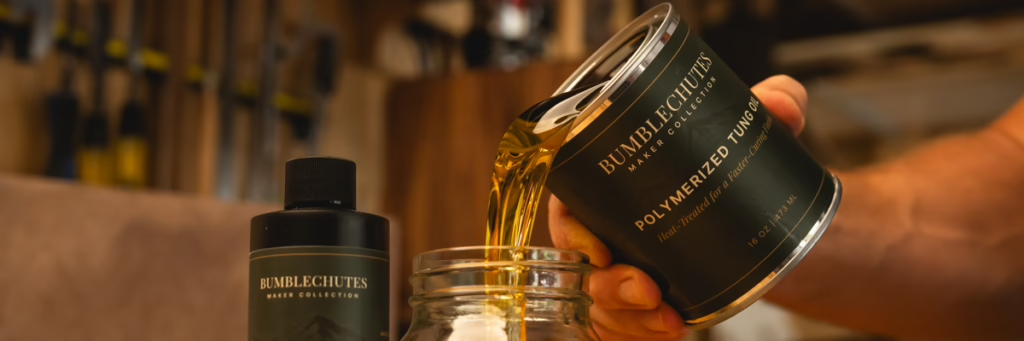
Bumblechutes Tung Oil

What Is Tung Oil?

Tung oil (also known as China wood oil) is a drying oil pressed from the seeds of the tung tree (Vernicia fordii), a tree native to China. It has been a staple of wood finishing for at least 2,500 years – even the writings of Confucius mention it being used to waterproof wooden boats [1]. In the modern era, tung oil remains highly regarded as one of the finest natural wood finishes [2]. When applied to bare wood, tung oil penetrates into the grain and reacts with oxygen from the air to polymerize (harden) into a solid resin within the wood fibers [6]. This cured tung oil forms a protective, flexible film that is water-resistant and enhances the wood’s natural chatoyance (grain shimmer and depth) [3].

Benefits of Tung Oil

Bonds with the wood

Unlike polyurethane or lacquer which sit on the surface as a hard coat, tung oil actually bonds with the wood at a cellular level. This means the finish moves with the wood, greatly reducing the chance of peeling, cracking, or blistering as the wood expands and contracts with humidity [4]. Tung oil is also prized for the warm, slightly amber tone it imparts without significantly darkening or yellowing the wood over time [7][8]. In other words, the wood keeps its natural color and only gets a bit richer – there’s no plasticky gloss or color distortion.

Natural and Food-Safe

In its pure form, tung oil is 100% natural – containing no polymers or chemicals other than the oil pressed from the nut. It is categorized as a non-toxic, food-safe finish, once fully cured [3]. In fact, tung oil is commonly used on items like salad bowls, butcher block countertops, wooden utensils, and cutting boards because it’s one of the few finishes that’s safe for direct food contact when dried [3]. It also doesn’t emit harmful vapors. Pure tung oil has zero VOCs (volatile organic compounds), making it an eco-friendly choice compared to solvent-based finishes [9]. For anyone sensitive to chemical fumes or concerned about indoor air quality, tung oil is a breath of fresh air – literally.

Resists Moisture

Another benefit: tung oil naturally resists moisture, mold, and even certain pests. It has anti-microbial properties that make it less prone to mildew growth compared to linseed oil finishes [10]. Once cured, tung oil creates a hydro-resistant barrier – water will bead on the surface rather than soaking in immediately [2].

The Drawback of Raw Tung Oil: Patience Required

If tung oil is so wonderful, why isn’t everyone using it on all their wood projects? The answer mostly comes down to time. Raw tung oil (pure, unmodified) has a notoriously slow drying and curing process. After you rub a coat of raw tung oil into wood, it can take days just to become touch-dry and anywhere from 2 to 6 weeks to fully cure into a hard finish [5][11]. The first coat soaks in and might dry in a day or two, but subsequent coats struggle to harden if the layer beneath is still curing. As a result, traditional advice often says to wait at least a week between coats of raw tung oil and a month or more after the final coat before the piece is ready for regular use [12].

Many products sold as “tung oil finish” in hardware stores aren’t pure tung oil at all – they might be a mixture of oils, resins, and solvents formulated to dry quicker. Some famous “Tung Oil Finish” brands contain little to no actual tung oil [13]! They are often wiping varnishes (a dilute varnish that imitates an oil finish) or oil/varnish blends that include urethanes.

The Solution: Polymerized Tung Oil

Wood finish manufacturers discovered that by pre-treating tung oil in certain ways, they could speed up its drying time and even make the cured finish harder – without adding chemicals. The result is known as polymerized tung oil.

Polymerized tung oil has been partially polymerized before it ever hits your wood, and this is typically achieved by heating the oil under controlled conditions (often in the absence of oxygen) to trigger it to begin the polymerization (hardening) process in a uniform way [14]. When you apply polymerized tung oil to wood, it continues to cure and harden, but much faster than raw oil since it’s already well on its way to becoming a solid resin.

This yields a concentrated oil that is more viscous than raw tung oil (since some molecules have linked together) and which will cure to a durable film in a fraction of the time of raw oil [14]. Importantly, a well-made polymerized tung oil contains no solvents, no petroleum distillates, and no added chemicals – it’s still 100% tung oil, just with a head-start on curing. That means it remains low/zero VOC and food-safe when cured [14].

Why Polymerized Tung Oil is the Best Choice for Wood Finishing

When evaluating the best oil for finishing wood, it’s important to consider not just durability, but also safety, ease of application, and long-term protection. Polymerized tung oil excels in every category, offering deep penetration, fast curing, and a natural, non-toxic profile that makes it ideal for kitchenware, furniture, and flooring alike.

Here’s why polymerized tung oil offers superior performance:

  1. Faster Drying and Curing – Dries to the touch in 12–24 hours vs. 2-7 days for raw tung oil and fully cures in 5–10 days vs. 2–6 weeks for raw tung oil [5][14].
  2. Harder Finish – Polymerization improves cross-linking, resulting in better scratch resistance [5].
  3. Improved Water Resistance – Begins resisting water from the first coat [5].
  4. Non-Yellowing – Maintains a clean amber tone without darkening over time [7][8].
  5. No Rancidity or Mold – Cures completely, resisting mildew and spoilage unlike some other oils [10].
  6. Zero VOC and Non-Toxic – No added solvents or driers, making it safer for health-conscious users [9].
  7. Sustainable and Biodegradable – Plant-based and eco-friendly with minimal environmental footprint [15].

Safe Finishing: No Toxins, No Fumes, No Worries

Polymerized tung oil is ideal for anyone prioritizing indoor air quality, sustainability, and long-term health. Here’s why:

  • Zero VOCs – No toxic vapors released during application [9].
  • Food-Safe – Cured polymerized tung oil is safe for direct food contact surfaces [3].
  • No Chemical Driers – Just heat, not heavy metals or solvents [14].
  • Safe for Indoor Use – No strong fumes, so it’s safe for your family and pets [9].
  • Eco-Friendly – Made from renewable tung nuts, biodegradable, and non-polluting [15].
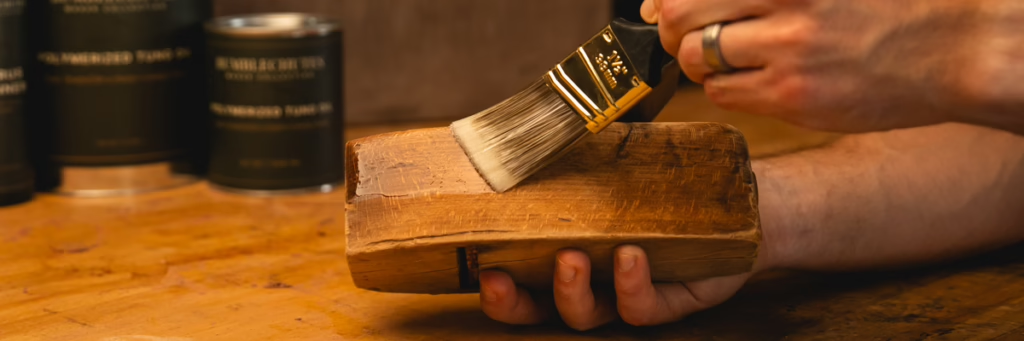
Bumblechutes Tung Oil Application

How to Apply Polymerized Tung Oil for Best Results

  1. Prep the Surface: Sand your wood to 180–320 grit. Remove dust with a tack cloth or clean rag.
  2. Apply Thin Coats: Wipe on a light coat with a lint-free cloth or brush. Do not flood the surface.
  3. Let It Penetrate: Allow the oil to soak for 15–30 minutes, then wipe off all excess.
  4. Dry Time: Wait 12–24 hours between coats. Ensure each coat is dry to the touch before reapplying [5][14].
  5. Repeat: Apply 2–4 total coats depending on the porosity of the wood and desired depth.
  6. Final Cure: Allow 5–10 days for full curing before exposing to water or heavy use.
  7. Optional Buffing: After the final cure, buff with a soft cloth or apply a natural wax topcoat for extra sheen.

Safety Tip: Always lay oil-soaked rags flat to dry or submerge them in water before disposal to avoid fire risk [16].

Tung Oil vs. Other Finishes: A Quick Comparison

Finish TypeCures HardWater ResistantFood-SafeYellowing Over TimeEasy to Repair
Polymerized Tung Oil✅ Yes✅ Yes✅ Excellent✅ Yes❌ No✅ Yes
Raw Tung Oil✅ Yes⚠️ Slowly✅ Yes✅ Yes❌ No✅ Yes
Boiled Linseed Oil (BLO)❌ No✅ Yes⚠️ Moderate⚠️ Maybe✅ Yes✅ Yes
Mineral Oil✅ Yes❌ No❌ Poor✅ Yes❌ No❌ No
Polyyrethane❌ No✅ Yes✅ Excellent❌ No⚠️ Some✅ Yes
Shellac✅ Yes✅ Yes❌ Poor✅ Yes⚠️ Some✅ Yes

A Side-by-Side Comparison of Natural Wood Finishes: Why Polymerized Tung Oil Outperforms Raw Tung Oil, BLO, Mineral Oil, Polyurethane, and Shellac in Safety, Durability, and Ease of Use.

Why Bumblechutes’ Polymerized Tung Oil Is the Best

  • 100% Pure Grade A Tung Oil: No fillers, no varnish, no solvents – just the highest quality oil.
  • Expert Polymerization: Gently heated in oxygen-free conditions to create a fast-curing, hard-wearing oil without chemicals.
  • Food-Safe and Non-Toxic: Safe for cutting boards, butcher blocks, wooden toys, and indoor furniture.
  • Flexible and Durable: Expands and contracts with wood; resists cracking, peeling, and water damage.
  • No Rancidity or Spoilage: Properly cured oil never goes bad or grows mold.

From cutting boards and countertops to high-end furniture and handmade tools, Bumblechutes’ polymerized tung oil gives wood the protection it needs — and the beauty it deserves.

Conclusion

In the world of wood finishing, polymerized tung oil stands above the rest. It’s the perfect union of natural tradition and modern performance — offering a safer, faster, and more durable solution for everyone from hobbyists to professionals. With Bumblechutes’ premium-grade polymerized tung oil, you can confidently finish your work knowing it’s protected with one of the best finishes nature has to offer.

No harmful fumes. No synthetic shortcuts. Just pure performance and pure peace of mind.

References

  1. Encyclopedia Britannica. “Tung Oil.”
  2. Fine Woodworking Magazine. “Choosing the Right Oil Finish.”
  3. FDA GRAS Listing for Drying Oils.
  4. Popular Woodworking. “Oil Finishes: What You Need to Know.”
  5. The Wood Database. “Tung Oil: Properties and Performance.”
  6. Wood Finishing 101, Bob Flexner.
  7. Hardwood Distributors Association. “Non-Yellowing Wood Finishes.”
  8. American Woodworker. “Oil-Based vs Water-Based Finishes.”
  9. Green Building Advisor. “Low-VOC Wood Finishing Options.”
  10. Journal of Natural Products. “Antimicrobial Properties of Drying Oils.”
  11. Woodshop News. “Understanding Drying Oils.”
  12. The Real Milk Paint Co. “Raw vs Polymerized Tung Oil.”
  13. Consumer Reports. “What’s Really in That Tung Oil Finish?”
  14. Hand-Rubbed Finishes: A Guide to Natural Oils, Michael Dresdner.
  15. Environmental Protection Agency. “Renewable Bio-Based Materials in Manufacturing.”
  16. NFPA Fire Safety Fact Sheet: Spontaneous Combustion of Oil-Soaked Rags.

The Best Cutting Board Oil Options: Why Fractionated Coconut Oil Reigns Supreme

Cutting boards are the unsung heroes of the kitchen. They endure daily use, sharp knives, moisture exposure, and frequent washing—all of which can take a toll on the wood. Proper care and maintenance not only extend the life of your cutting board but also ensure it remains sanitary and functional. One of the most crucial aspects of wood care is oiling your cutting board regularly. But not all oils are created equal.

In this comprehensive guide, we’ll explore the best cutting board oil options, why mineral oil is just okay but not great, and why fractionated coconut oil—like the one found in Bumblechutes’ Hydrating Wood Serum—is a superior choice. We’ll also discuss the frequency of oiling, how to properly oil your cutting board, and why maintaining your board is essential for hygiene and longevity. Plus, for those looking for a bulk alternative, Bumblechutes’ Woodworker’s Oil provides another excellent option.

Why Your Cutting Board Needs Oil

Wood is a natural material that expands and contracts with moisture and temperature changes. If left untreated, wooden cutting boards can dry out, crack, and warp. Additionally, porous wood can absorb food juices, leading to bacterial growth. Applying oil to your cutting board helps to:

  • Hydrate the wood, preventing drying and cracking.
  • Create a moisture barrier, reducing absorption of liquids and bacteria.
  • Enhance the natural beauty of the wood grain.
  • Extend the lifespan of your cutting board, saving you money in the long run.

Oiling your cutting board regularly is the best way to keep it in top condition—but which oil should you use? Let’s break it down.

Common Cutting Board Oils: The Good, the Bad, and the Best

FeatureFractionated Coconut Oil (Hydrating Wood Serum)Mineral Oil (Woodworker’s Oil)Vegetable Oils
Long-Lasting Protection✅ Yes❌ No❌ No
Won’t Go Rancid✅ Yes✅ Yes❌ No
Absorbs Deeply✅ Yes❌ No❌ No
Antibacterial Properties✅ Yes❌ No❌ No
Eco-Friendly✅ Yes❌ No (Petroleum-Based)✅ Yes (But Spoils)

1. Mineral Oil (It’s Okay, But There’s Better)

Mineral oil has long been a go-to choice for cutting board maintenance. It’s inexpensive, widely available, and food-safe. However, there are some major downsides:

  • It’s a petroleum byproduct – While food-grade mineral oil is safe, it comes from the same base materials as crude oil.
  • It doesn’t polymerize – Unlike some plant-based oils, mineral oil does not cure or harden, meaning it never truly bonds with the wood.
  • It evaporates quickly – Mineral oil wears off easily, requiring frequent reapplications.
  • It doesn’t offer long-lasting protection – Since it doesn’t bond with the wood, it offers only temporary hydration and protection.

For those looking for an affordable bulk solution, Bumblechutes’ Woodworker’s Oil provides a high-quality, food-safe mineral oil option designed for those who prefer traditional mineral oil treatments.

2. Vegetable Oils (A Big NO!)

Some people mistakenly use vegetable oils like olive, canola, or sunflower oil to condition their cutting boards. This is a terrible idea because these oils:

  • Turn rancid over time, creating an unpleasant smell and potential bacteria breeding ground.
  • Leave a sticky residue instead of deeply penetrating the wood.
  • Are not designed for wood protection and break down too quickly.

3. Beeswax and Carnauba Wax (Great Additions, But Not Standalone Solutions)

Wax-based products, like Bumblechutes’ Wood Conditioner, are excellent for adding a layer of protection after oiling, but they shouldn’t be used as a standalone solution. They provide water resistance and a subtle sheen but do not penetrate the wood deeply like oil does.

4. Fractionated Coconut Oil (The Best Choice)

Now, let’s talk about the gold standard of cutting board oils: fractionated coconut oil. Specifically, the kind found in Bumblechutes’ Hydrating Wood Serum.

What Makes Fractionated Coconut Oil Superior?

  • It won’t go rancid – Unlike regular coconut oil or other plant-based oils, fractionated coconut oil is highly stable and will not spoil.
  • Deeply penetrates the wood – This oil absorbs into the wood fibers, offering long-lasting hydration and protection.
  • Prevents microbial growth – Coconut oil has natural antibacterial properties, making your cutting board safer to use.
  • Lightweight and non-greasy – It conditions the wood without leaving a sticky residue.
  • Eco-friendly – Unlike petroleum-based mineral oils, fractionated coconut oil is derived from natural sources.

If you want the absolute best protection for your cutting boards, Bumblechutes’ Hydrating Wood Serum is the way to go.

How Often Should You Oil Your Cutting Board?

The frequency of oiling depends on how often you use and wash your cutting board. A good rule of thumb is:

  • For daily use: Oil once a week.
  • For occasional use: Oil once a month.
  • For brand-new boards: Oil once a day for the first week to help saturate the wood.

A simple test to check if your board needs oil: Sprinkle a few drops of water on the surface. If the water beads up, the board is still well-conditioned. If it soaks in quickly, it’s time to reapply oil.

How to Properly Oil Your Cutting Board

  1. Start with a clean and dry board – Wash with warm, soapy water and let it fully air dry before applying oil. The salt in the Bumblechutes Wood Cleaning Kit acts as a natural abrasive, effectively scrubbing away food residue, stains, and bacteria without damaging the wood, making it a safe and eco-friendly way to deep-clean your cutting board.
  2. Apply a generous amount of oil – Pour Bumblechutes’ Hydrating Wood Serum or Woodworker’s Oil onto the surface.
  3. Spread the oil evenly – Use a clean cloth, paper towel, or your hands to rub the oil into the wood, ensuring full coverage.
  4. Let the oil soak in – Allow the board to sit for at least 30 minutes, or overnight for deeper absorption.
  5. Wipe off excess oil – Use a dry cloth to remove any oil that hasn’t absorbed.
  6. Apply a wax finish (optional) – For extra water resistance, apply Bumblechutes’ Wood Conditioner after oiling.

Common Myths & Misconceptions Section

  1. “You don’t need to oil your cutting board.”
    1. This is one of the most damaging misconceptions about wood care. Cutting boards are constantly exposed to moisture, detergents, and temperature fluctuations, which can dry out the wood and cause cracking. Without regular oiling, the board becomes brittle, absorbs more liquids (increasing the risk of bacteria growth), and deteriorates much faster. Oiling helps to hydrate, protect, and extend the life of your board, making it an essential step in maintenance.
  2. “Olive oil is fine for wood care.”
    1. Many people assume that because olive oil is food-safe, it must be a good option for wood conditioning. However, olive oil (along with other vegetable oils) turns rancid over time, creating an unpleasant smell and a sticky residue. Unlike fractionated coconut oil or mineral oil, olive oil does not fully absorb into the wood, making it ineffective for long-term protection.
  3. “Soap is enough to clean a cutting board.”
    1. While washing your cutting board with soap removes surface-level dirt and bacteria, it does nothing to prevent the wood from drying out. Over time, washing without reapplying oil will strip away natural moisture, leading to cracks and warping. Regular oiling restores and protects the wood fibers, ensuring your board remains durable and resistant to moisture absorption.

Final Thoughts: Invest in the Best Cutting Board Oil

While mineral oil has been the standard for years, fractionated coconut oil—especially the kind used in Bumblechutes’ Hydrating Wood Serum—is a far superior choice. It offers longer-lasting protection, doesn’t go rancid, and deeply nourishes your cutting board. Whether you’re a home cook or a professional chef, taking the time to oil your cutting board with the right product will ensure its longevity and safety for years to come.

For those who prefer a bulk mineral oil solution, Bumblechutes’ Woodworker’s Oil is an excellent alternative. And if you want to add a layer of protection, consider a Wood Conditioner for an extra moisture-resistant finish.

Your cutting board is a crucial part of your kitchen—treat it with the care it deserves!

What type of oil do you currently use to maintain your cutting board?

  • Fractionated Coconut Oil (like Bumblechutes’ Hydrating Wood
  • Mineral Oil (like Bumblechutes’ Woodworker’s Oil)
  • A combination of oil and wax
  • I don’t oil my cutting board (but I should!)
Bumblechutes Kitchen Collection
Complete your kitchen care routine with Bumblechutes’ ultimate lineup—premium oils, waxes, and cleaners designed to keep your woodware in perfect condition! The Ultimate Kitchen Care Kit!

This article was written by Erik Albrecht, woodworker and founder of Bumblechutes, who has spent years researching the best oils and waxes to care for wooden products. His expertise in wood care ensures that your cutting boards, utensils, and furniture receive the highest level of protection and longevity.

5 Reasons Why Bumblechutes is the Perfect Choice For Your Kitchen

Your kitchen deserves products that work as hard as you do. Whether you’re cooking or entertaining, Bumblechutes helps keep every piece looking its best.

Our all-natural oils and waxes are designed to nourish, protect, and restore wood without harsh chemicals or synthetic fillers. Here’s why Bumblechutes is the go-to choice for cutting boards, butcher blocks, utensils, and beyond.

1. Natural Ingredients That Actually Care for Wood

We believe in formulas you can trust, made from real, natural oils and waxes, not mystery blends or fillers. Each ingredient in Bumblechutes serves a purpose:

  • Coconut oil to deeply condition
  • Beeswax and carnauba wax to lock in moisture and add a glossy finish
  • No solvents, petroleum, or artificial fragrances ever

These natural components soak into wood fibers to revive the grain, prevent cracking, and create a food-safe barrier that stands up to daily use.

Pro Tip: You’ll see the difference after the first application: richer tone, smoother feel, and wood that looks freshly renewed.

2. Made in the USA, Crafted with Care

Bumblechutes USA Beewax

Every bottle of Bumblechutes is manufactured right here in the USA, in small batches to ensure quality and consistency.

Our team handcrafts each product with the same care you put into maintaining your home, from responsibly sourced ingredients to eco-friendly packaging choices.

3. Family-Run, Passion-Driven

Erik & Crystal from Bumblechutes

Bumblechutes started with a simple goal: to make high-quality, natural finishes that people feel good using in their homes.

We’re a family-run business, built on the belief that small details, like what goes products in your kitchen, matter. Every order supports our small team, our partners, and our mission to create better, safer products for everyday life.

“We started Bumblechutes because we couldn’t find natural, effective options that didn’t compromise on quality. We wanted something simple, sustainable, and built to last.” — The Bumblechutes Team

4. Food-Safe and Eco-Friendly by Design

Your kitchen surfaces come into contact with food every day, and that’s why our finishes are 100% food-safe, non-toxic, and natural.

Our formulas:

  • Are free from harmful petroleum, solvents, or chemicals, safe for use in your kitchen and around your family
  • Are safe for all wood that touches food, from cutting boards to serving spoons
  • Use eco-friendly ingredients for guilt-free care

You can feel confident that your wood care routine is as clean and natural as your cooking.

5. Easy to Use — and Easy to Love

Wood care shouldn’t be complicated. Bumblechutes makes it simple to restore and protect in just a few steps:

  1. Freshen with the Cutting Board Cleaning Kit: Clean and scrub your wooden kitchenware with the soap, salt, and applicator to remove buildup and harmful germs.
  2. Hydrate with the Wood Serum: Apply the Hydrating Wood Serum to penetrate and restore moisture while protecting against UV damage.
  3. Protect with the Wood Conditioner: Seal the wood with the All-In-One Wood Conditioner to lock in hydration and add a smooth, protective finish.

That’s it! No sticky residue, no long wait times. Just beautiful, healthy wood ready for whatever’s next.

Results you’ll notice: Enhanced grain definition, smooth texture, and long-lasting protection from moisture and daily wear.

Bonus: A Little Goes a Long Way

Because Bumblechutes formulas are concentrated and high-performing, a single jar can last months, saving you money and reducing waste. It’s sustainable care that truly endures.

See the Difference for Yourself

Your kitchen tells a story, Bumblechutes helps preserve it. Whether you’re refreshing your favorite cutting board or maintaining heirloom kitchen tools, our natural finishes make care simple and satisfying.

Explore the Kitchen Collection

Bumblechutes products are made to last, made to perform, and made for people who value what goes into their homes. Natural. Simple. Effective. That’s the Bumblechutes way.

The Sweet Benefits of Supporting Local Beekeepers

Honeybees are some of the most important creatures on the planet. They provide a range of essential services to us – from pollinating our crops to producing honey and wax. Without them, our food production systems would fall apart and human diets would suffer. That’s why it’s so important to support local beekeepers and their hard work. Bumblechutes only uses local beeswax for their products, and here are just a few of the many reasons why.

Honeybees are Important for Crop Pollination

Honeybees are essential for pollinating many of the crops that make up our diets. As they fly from flower to flower collecting nectar, they are also transferring pollen which fertilizes the plants. This fertilization helps the plants to produce fruits, vegetables and nuts. In fact, it is estimated that one-third of all the food that we eat depends upon honeybees for pollination.

Local Honey and Wax are Environmentally Friendly

The products of local beekeepers – honey and wax – are both environmentally friendly. Local honey is made without the use of pesticides or other chemicals, meaning that it is of higher quality than honey produced using industrial techniques. Similarly, local wax is made using traditional techniques and produces less waste than its industrial counterparts. This makes local beekeepers a great choice for those looking to reduce their environmental footprint.

Supporting Local Beekeepers is Good for the Economy

By supporting local beekeepers, you are helping to keep the local economy strong. Local beekeepers are not only providing us with the products of their hard work, but they are also creating jobs and providing livelihoods to many people. This boosts the economy of the area and helps to create a more resilient, sustainable community.

Local Honey and Wax Taste Better

Finally, local honey and wax taste better than their industrial counterparts. As local beekeepers use traditional techniques and produce their products without the use of chemicals, the honey and wax have a much more natural, genuine taste. This makes them the perfect choice for those looking for the highest quality of honey and wax.

Supporting local beekeepers is essential for our food production systems, our environment, and our economy. However, it also provides us with a range of delicious, unique products – honey and wax – that are made using traditional techniques and are of higher quality than their industrial counterparts.

Buying beeswax from local beekeepers is the best choice if you want to get the highest-quality product and support a sustainable, environmentally-friendly industry. Not only does it support local economies, but buying locally also ensures that the beeswax is harvested and processed using traditional methods, which results in a higher-quality product. Additionally, because local beekeepers are more likely to use sustainable practices, they help to protect the environment. In short, buying beeswax from local beekeepers is a win-win situation.