
Frequently Asked Questions
Bumblechutes creates purpose-built care systems rather than trying to make one product do everything.
Our Oakholm Kitchen collection is designed to clean, condition, and protect cutting boards, butcher blocks, utensils, and other wooden kitchenware. Our Maker collection includes penetrating oils, protective waxes, and curing finishes developed for furniture, woodworking projects, tools, and hard-use surfaces.
Every Bumblechutes product is formulated, manufactured, filled, and packed at our facility in Salem, New Hampshire. We use carefully selected oils, waxes, and functional ingredients chosen for performance, ease of use, and long-term protection.
Our goal is simple: help you maintain what you own, achieve professional-quality results, and restore rather than replace.
Choose your system based on the project:
- For cutting boards, butcher blocks, bowls, and wooden utensils: use Cutting Board Soap for routine cleaning, Cutting Board Scrub when deeper cleaning is needed, Cutting Board Oil to condition the wood, and Cutting Board Wax for additional surface protection.
- For an easy-to-maintain finish on woodworking projects: use Maker’s Oil followed by Shop Wax.
- For a more durable, curing wood finish: choose Wood Finish, Polymerized Tung Oil, or Bee’nooba according to the appearance and application method you prefer.
- For tools, blades, metal equipment, and outdoor gear: use Shop Wax for indoor use or Field Wax for stronger outdoor use.
- For cast iron cookware and grill surfaces: use Cast Iron & Grill Seasoning Wax.
- For leather goods: use Leather Conditioner.
Always review the individual product page before beginning your project.
No. Each product can serve a specific purpose on its own.
For basic cutting-board maintenance, Cutting Board Oil is the best place to start. Cutting Board Wax adds longer-lasting surface protection and a smoother finish. Cutting Board Soap and Cutting Board Scrub make cleaning easier without unnecessarily stripping away the conditioning treatment.
For the most complete results, use the products as a system: clean, condition, and protect.
Only combine products that are intended to work together.
Cutting Board Oil and Cutting Board Wax are designed as a complementary system. Maker’s Oil and Shop Wax are also designed to be paired.
Do not automatically apply a non-curing kitchen oil underneath a curing finish such as Wood Finish, Polymerized Tung Oil, or Bee’nooba. Mixing incompatible systems can slow curing or leave a soft, cloudy, or tacky surface. When changing finish types, contact us or test the complete process on a sample first.
Cutting Boards and Kitchenware
Cutting Board Oil penetrates the wood and helps replenish oils lost through washing and everyday use.
Cutting Board Wax remains closer to the surface, helping resist moisture while creating a smoother feel and renewed appearance.
For the most complete treatment, apply Cutting Board Oil first, wipe away the excess, and finish with a thin coat of Cutting Board Wax.
No. Our Cutting Board Oil is formulated with fractionated coconut oil, vitamin E oil, cold-pressed lemon oil, and non-nano zinc oxide.
No. Apply a thin, even coat and allow it to absorb for approximately 20–30 minutes. Wipe away all remaining product and buff the surface until it feels clean and dry rather than oily or sticky.
An overnight rest is optional and can be helpful for a new, very dry, or highly absorbent board, but it is not required for routine maintenance.
This guidance applies to Cutting Board Oil and Cutting Board Wax. Curing finishes such as Wood Finish, Polymerized Tung Oil, and Bee’nooba require additional drying and curing time.
Less is more. Begin with enough product to create a thin, even film across the surface.
For an average cutting board, start with approximately one tablespoon per side and add more only where the wood absorbs it quickly or still appears dry. End-grain, new, or neglected boards may require more than previously conditioned boards.
Reapply the Cutting Board Oil until no visible dry areas exist.
Use approximately half as much Cutting Board Wax as Cutting Board Oil. A heavy coat does not provide better protection and is more difficult to buff properly.
Use only enough Cutting Board Soap to clean the surface without soaking the wood.
Cutting Board Scrub is a deeper-cleaning treatment. Begin with a small amount, work it across the damp surface, and add more only if needed. Rinse away any remaining cleaner and allow the board to dry completely before applying Cutting Board Oil or Cutting Board Wax.
Treat the condition of the wood—not the calendar.
Reapply when the wood begins to look pale or dry, feels rough, or absorbs water quickly instead of allowing it to bead on the surface. A heavily used board may need attention every two to four weeks, while a lightly used board may go several months between applications.
Regular light maintenance is more effective and uses less product than waiting until the board becomes severely dried out.
Hand-wash it with lukewarm water and Cutting Board Soap, rinse it, wipe away excess water, and allow it to air-dry upright so both sides receive airflow.
Never place a wooden cutting board in the dishwasher, leave it submerged in water, or allow it to remain wet against a countertop. Excess heat and moisture can cause warping, cracking, or separation at glue joints.
Use Cutting Board Scrub when the board needs deeper cleaning or help with surface odors and discoloration.
Make sure the board is clean and completely dry. Apply a generous but controlled coat of Cutting Board Oil to every surface, including the sides and end grain.
Allow the oil to absorb for approximately 20–30 minutes, wipe away the excess, and inspect the board. If dry areas remain, repeat the process. Once the board is evenly conditioned, apply a thin coat of Cutting Board Wax and buff thoroughly.
No. If the product has been applied correctly and the surface has been thoroughly buffed, washing is unnecessary.
If oil or wax transfers to your hand or a clean paper towel, continue buffing and allow the board additional time to rest before use.
Cutting Board Scrub can help lift surface residue, odors, and light discoloration. It cannot reverse deep staining, knife damage, mold growth, or discoloration that has penetrated far into the wood.
More serious damage may require sanding or professional repair. After deep cleaning or sanding, recondition the board with Cutting Board Oil and Cutting Board Wax.
Cutting Board Oil and Cutting Board Wax can be used on most unfinished or previously oil-treated bamboo kitchenware. Because bamboo is dense and commonly contains multiple glue joints, apply light coats and avoid oversaturating it.
Always test a small area first, particularly on factory-finished bamboo products.
The Oakholm Kitchen collection and Cast Iron & Grill Seasoning Wax are developed for kitchen use. Certain Maker finishes may also be appropriate for food-contact surfaces after they have fully cured; follow the instructions for that individual product.
Food-contact safe does not mean edible. Do not ingest the products, and keep all containers out of reach of children and pets.
Absolutely. The Oakholm Soap, Scrub, Oil, and Wax are excellent for any unfinished or previously oil-treated wooden surfaces. If you have a favorite bowl or spoon that is looking a little dry, add some Cutting Board Oil and Wax to help keep it hydrated and protected for years to come.
Woodworking and Curing Finishes
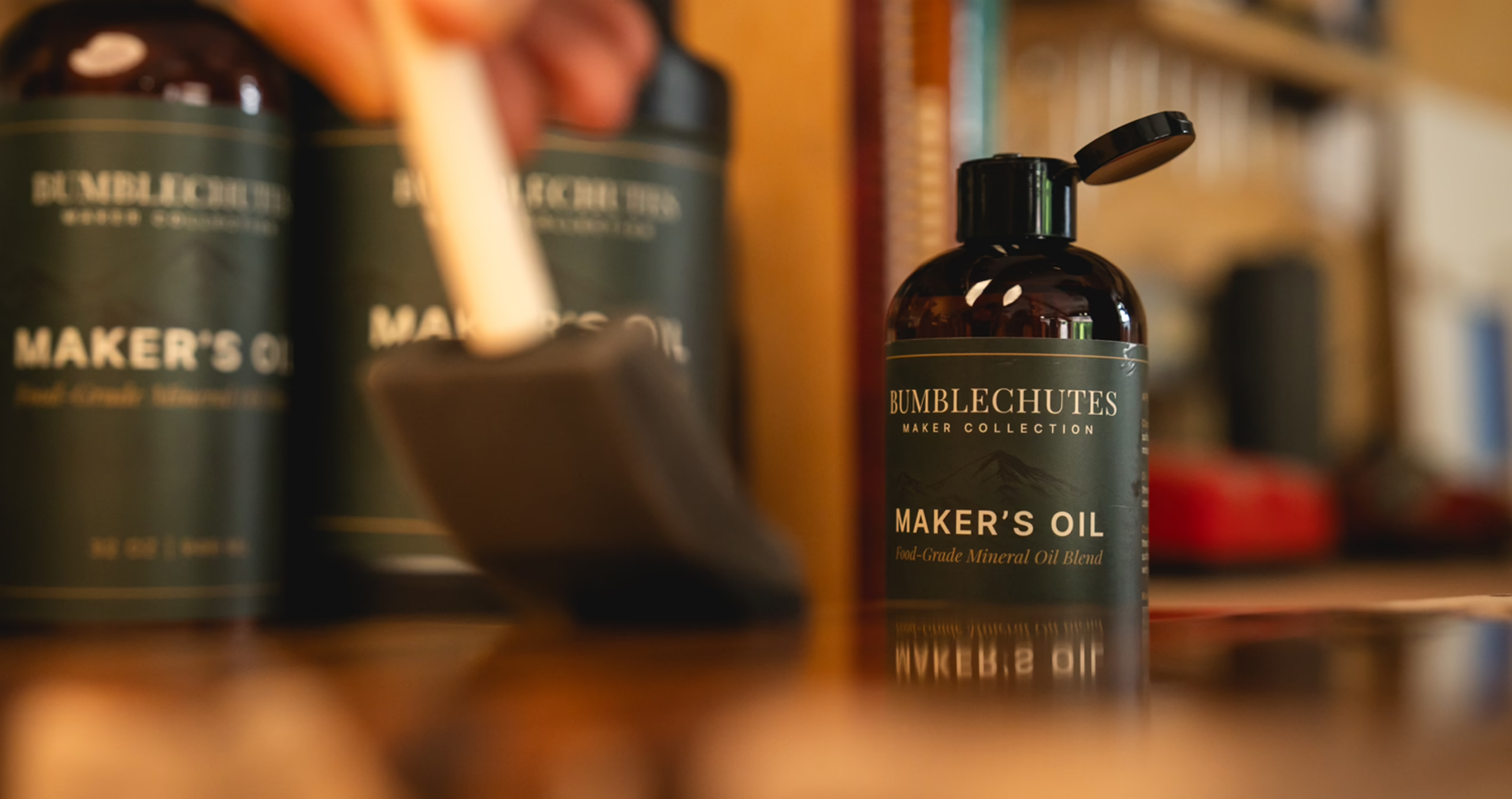
Maker’s Oil is an easy-to-apply penetrating treatment that enhances the wood’s natural character and is designed to pair with Shop Wax.
Shop Wax adds a renewable protective layer and can be used on appropriate wood, metal, tools, and shop surfaces.
Wood Finish is a curing finish designed to penetrate raw wood and develop more durable protection than a routine conditioning oil.
Polymerized Tung Oil provides a traditional curing-oil finish with improved drying performance compared with raw tung oil.
Bee’nooba combines polymerized tung oil, natural waxes, vitamin E oil, and citrus solvent to create a rich, renewable finish with additional surface protection.
Citrus Thinner may be used only where the product instructions recommend thinning or cleanup. It is not a standalone finish.
A finish is dry when the surface no longer feels wet or tacky. It is cured when the oxidation process has progressed far enough for the finish to develop its intended hardness, durability, and resistance.
A finish may feel dry long before it is fully cured. Temperature, humidity, airflow, wood species, and the thickness of each coat can all change the timing.
Apply thin coats and wait until the previous coat is dry, non-tacky, and no longer transfers oil to a clean cloth. Under normal conditions, this is typically at least 12–24 hours.
Cool temperatures, high humidity, limited airflow, or overly heavy applications will require more time. Never apply another coat over a surface that still feels tacky.
Follow the instructions on the individual product because coat and cure times may vary.
Unless the individual product instructions state otherwise, allow approximately 24–48 hours before light handling and at least five to seven days before regular exposure to water, food, cleaning, or heavy use.
The finish will continue developing hardness beyond that initial period. Cooler or more humid conditions may extend the curing time.
Wait until the Wood Finish is dry, non-tacky, and no longer transfers oil to a clean cloth. Under normal conditions, this is generally 12–24 hours after a properly applied thin coat.
You do not need to wait for the Wood Finish to reach its complete final cure before applying Bee’nooba as part of the same finishing system. If the surface remains tacky, wait longer. Applying wax over uncured excess oil can trap the oil and significantly slow the curing process.
The most common causes are applying too much product, failing to remove the excess, insufficient airflow, low temperature, or high humidity.
Move the project to a warm, well-ventilated area and wipe away any product remaining on the surface with a clean cloth. Allow additional drying time before applying anything else.
Do not try to correct tackiness by adding another coat. If the problem remains, contact us with the product used, wood species, number of coats, application method, temperature, humidity, and drying time.
Most projects benefit from multiple thin coats rather than one heavy coat. Wood Finish commonly requires two to three coats, but the ideal number depends on the product, wood species, porosity, and level of protection required.
Stop when the wood develops an even appearance and no longer absorbs the finish readily. Follow the directions on the individual product page for the final coat and curing schedule.
Many curing finishes can be used over a completely dry, compatible stain, but compatibility depends on the stain’s chemistry.
Test the complete stain-and-finish system on scrap wood or an inconspicuous area first. Water-based, oil-based, gel, and pigment-heavy stains can behave differently. Do not apply a topcoat until the stain has fully dried according to its manufacturer’s instructions.
Penetrating oils cannot properly enter wood that has already been sealed with polyurethane, lacquer, varnish, paint, or a similar film-forming finish.
A wax may alter the sheen or feel of certain sealed surfaces, but compatibility is not guaranteed. Test an inconspicuous area first. For the strongest and most predictable results, apply penetrating finishes to raw wood or a compatible existing oil finish.
Yes, but select the product according to the existing surface and the durability required.
Maker’s Oil and Shop Wax are well suited to easy-to-renew finishes. Wood Finish, Polymerized Tung Oil, and Bee’nooba are better candidates when a curing finish is desired.
On antiques or previously finished furniture, identify the existing finish and test an inconspicuous area before treating the entire piece.
They can revive dry, faded wood, enrich its natural color, and reduce the appearance of minor surface wear. They cannot repair loose joints, missing veneer, rot, water damage, deep stains, or structural problems.
Antiques may have shellac, lacquer, wax, oil, or another historic finish that reacts differently. Test first and consult a restoration professional before altering a valuable piece.
Wood Finish or Polymerized Tung Oil may be appropriate for certain raw or properly prepared wood floors, but floors involve significant wear, slip-resistance, curing, and maintenance considerations.
Do not use Cutting Board Oil on a floor. Test the selected curing finish in an inconspicuous area and contact us before beginning a large flooring project.
Certain curing finishes can be used on protected exterior wood, but outdoor exposure requires more frequent inspection and maintenance than indoor use.
Do not describe any Bumblechutes finish as a permanent UV blocker, waterproof barrier, wood preservative, or insect repellent unless the specific product has been tested and labeled for that purpose.
For continuous rain, standing water, ground contact, or fully exposed outdoor structures, use a finish specifically rated for those conditions.
Oils and waxes can darken dry fibers and soften the appearance of light surface scratches. They do not physically fill deep scratches, dents, gouges, or missing material.
Deeper damage may require sanding or another repair before the finish is reapplied.
Application, Storage, and Safety
For Oakholm Kitchen Collection products, feel free to use any clean, lint-free cloth, a compatible applicator pad, or Bumblechutes Professional Finishing Pads. Wash hands after use if you happen to have any Citrus Degreaser left on your skin.
For any Maker Collection items, wear gloves when appropriate. Avoid applying finishes with your bare hands. If any curing oils/waxes touch the skin, you can just wash your hands with soap and water to remove any residual oil or wax.
Cloths used with drying oils—including Wood Finish, Polymerized Tung Oil, Bee’nooba, and other polymerizing finishes—can generate heat as the oil cures and may ignite if left folded, piled, or placed in the trash while wet.
After use, lay cloths flat in a safe, well-ventilated outdoor location away from buildings and combustible materials until they are completely dry and hardened. Alternatively, keep them fully submerged in water inside a sealed metal container until they can be disposed of according to local requirements.
Never leave wet oily cloths in a pile, bag, drawer, vehicle, or ordinary trash container.
Most Bumblechutes oils and waxes perform best when used within approximately 18–24 months, although the exact shelf life depends on the formula and storage conditions.
Keep containers tightly closed in a cool, dry place away from direct sunlight, excessive heat, open flames, and freezing temperatures. Avoid introducing water, dust, or used applicators into the container.
If a product develops an unusual rancid odor, visible contamination, or a permanent change in performance, discontinue use and contact us.
Natural wax products can change texture after exposure to cold or heat. Allow the closed container to return gradually to room temperature, then stir or work the product until it becomes uniform.
Do not place the container over an open flame or use uncontrolled direct heat. If the product does not return to a usable consistency, contact us before applying it.
Bumblechutes does not test its finished products on animals.
Some formulas contain beeswax and are therefore not vegan. Review the ingredient list on the individual product page if you have specific ingredient, allergy, or lifestyle concerns.
Bumblechutes products are formulated, manufactured, filled, and packed at our facility in Salem, New Hampshire.
A vast majority of our ingredients are domestically sourced with few natural ingredients only available internationally to meet our standards for consistency, purity, and performance.
Ingredient information is available on each product page. Safety Data Sheets are available through the Safety Data Sheets section of our website.
For commercial, workplace, or regulatory questions, contact us at info@bumblechutes.com.
The correct application depends on the individual product:
- Oakholm Kitchen products are intended for appropriate cutting boards, butcher blocks, wooden utensils, bowls, and similar kitchenware.
- Maker products may be used on suitable raw or oil-finished furniture, turned pieces, carvings, countertops, cabinetry, trim, and woodworking projects.
- Field Wax is designed for suitable tools, blades, metal equipment, and hard-use gear.
- Cast Iron & Grill Seasoning Wax is intended for compatible cast iron cookware and grill surfaces.
- Leather Conditioner is intended for compatible finished leather.
Always review the product instructions and test an inconspicuous area first. Material type, previous coatings, porosity, preparation, and intended use all affect the final result.


